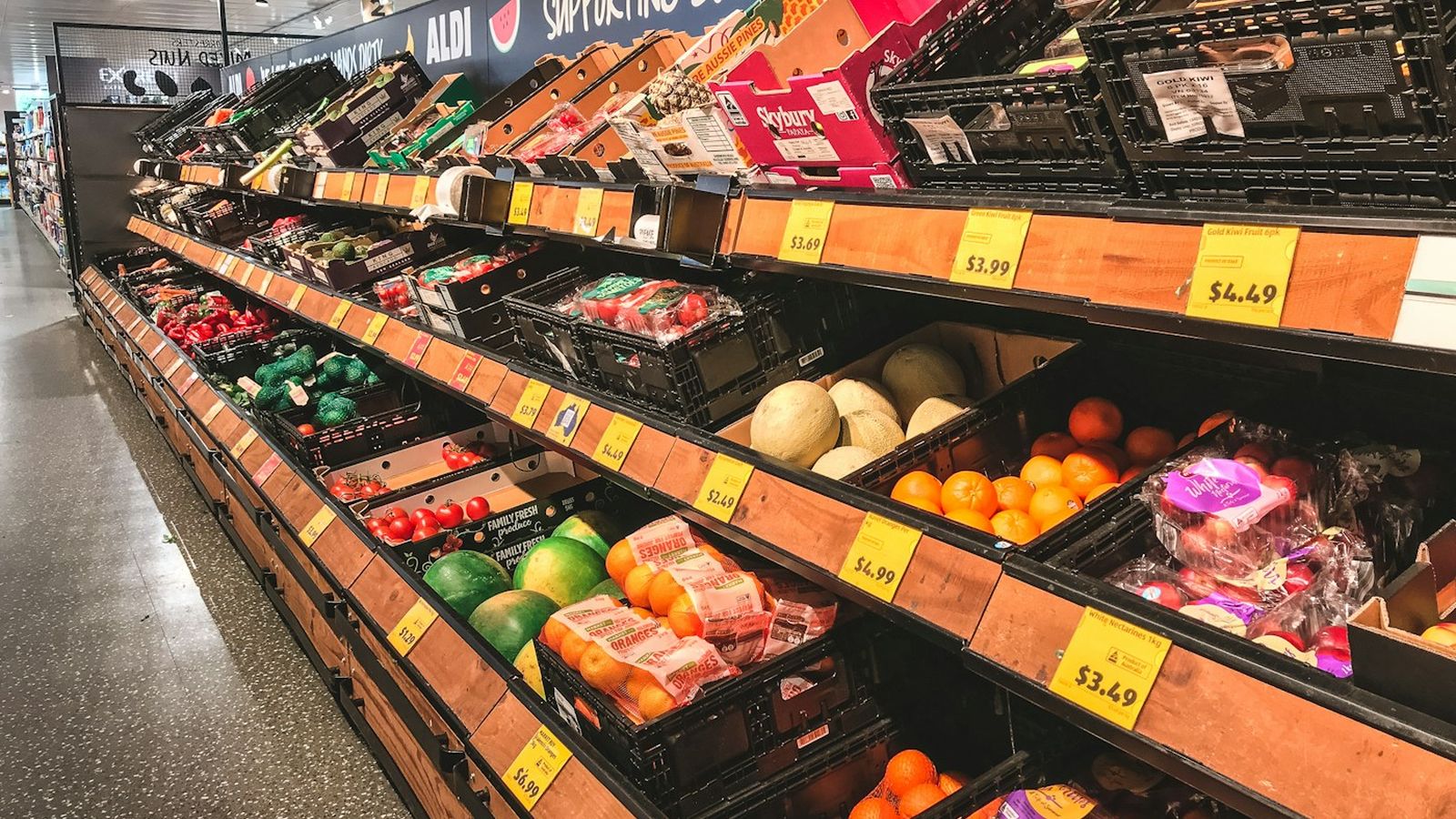
On every shelf label in a large Australian supermarket there are two prices. The big one is what you'll be charged. The small one — $3.20 per 100g, $1.02 per litre — is the one that tells you whether you're being sensible.
That small figure is the unit price, and it exists for one reason: to make two products of different sizes directly comparable. It's the closest thing a supermarket has to an objective measure, and it is deliberately, consistently, printed in the smallest type on the label.
The assumption it quietly demolishes
Most of us carry a rule of thumb: the bigger pack is better value. It's usually true. It is not reliably true, and the exceptions cluster in an inconvenient place — around whichever size is currently on promotion, and around whichever size the manufacturer has most recently changed.
Here's the situation that catches people, drawn out.
Where it earns its keep: shrinkflation
Shrinkflation is when a pack gets smaller while the price stays where it is — or rises. Nothing about the shelf ticket announces it. The brand looks the same, the packaging is often near-identical, the price you remember is the price you see, and the only thing that moved is a number in small print on the back.
The unit price is the one figure on the label that cannot hide it. Two hundred grams becoming a hundred and eighty at the same price is invisible in dollars and unmissable in cents-per-100g. It's the difference between a change you'd never notice and a change you can't miss.
Where the rules are heading. In September 2025 the federal government opened consultation on strengthening the Unit Pricing Code — improving how readable and prominent unit prices are, widening which retailers must display them, resolving inconsistencies in units of measure, and introducing shrinkflation notices so shoppers are told when a pack size has been reduced. CHOICE research has found around 90% of consumers say they always or often use unit pricing when choosing what to buy.
Using it without becoming a spreadsheet
Nobody wants to do arithmetic in an aisle. A few habits get almost all of the benefit for none of the effort.
- Compare like units. The code exists to make this possible, but you'll still meet the same category priced per 100g on one label and per kilo on the next. Convert before you conclude.
- Check it when something is on promotion. That's when the ranking between sizes is most likely to have flipped — a discounted medium pack routinely beats an undiscounted large one.
- Check it when a pack looks redesigned. New artwork is the single best predictor that the contents have changed size.
- Ignore it for things you buy on taste. Cheapest per gram isn't the goal for everything. It's a tool for comparing equivalents, not for choosing what you like.
The unit price is the only number on the shelf that's honest about size. But it still only describes today — it can't tell you that the same pack was 200g and $1.00 per 100g last winter.
That's the boundary of what a shelf label can do, and it's worth being clear about. Unit pricing solves comparison across the shelf: this pack against that pack, right now, on equal terms. It does nothing for comparison across time, which is where shrinkflation actually lives — a small change, repeated, in a direction you only perceive if someone wrote down the old number.
Use the unit price for the decision in front of you. For the slower question — is this product drifting, and when is it genuinely worth buying — you need a memory longer than a shopping trip.
A memory for the things you buy
Add a product to your watchlist and we'll follow its price for you, then email you when it genuinely drops. First name and email, no password.
Watch a product